A Study of Barrier-Free Designs for Autism Spectrum Disorder (ASD) in Hong Kong Shopping Centres
SIN Hau Lam
冼巧藍
BSc (Hons) in Surveying
I am passionate about building surveying because it is deeply connected to our daily lives. Buildings shape how we live, and their condition affects our safety and well-being. By ensuring regulatory compliance and improving building conditions in Hong Kong, I hope to safeguard our built environment for future generations while contributing meaningfully to the industry.
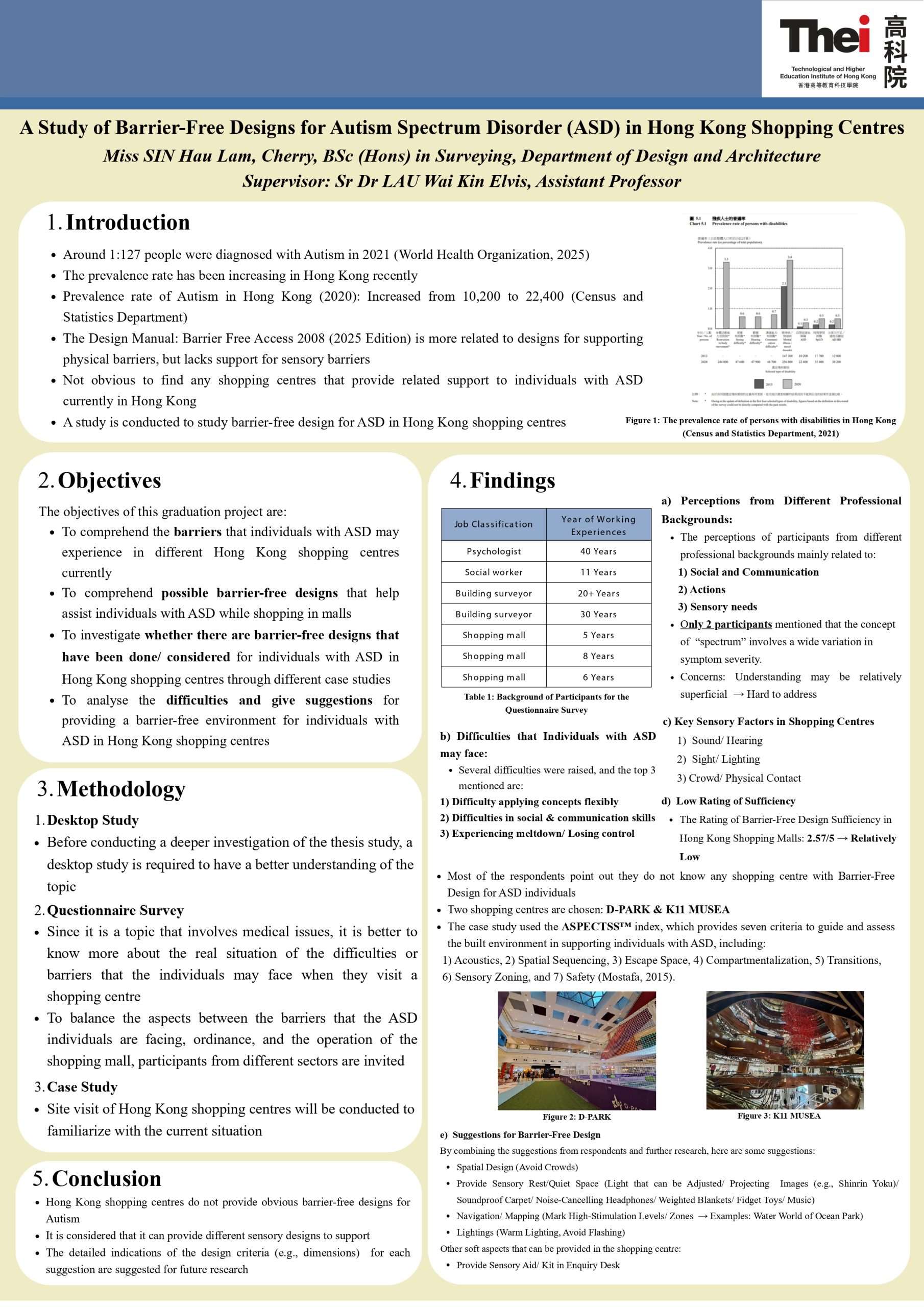
People with Autism Spectrum Disorder (ASD) belong to a neurodevelopmental disability group characterized by three severity levels in the DSM-5. However, regardless of severity level, individuals face similar difficulties when visiting public areas. This may limit their social life and community participation, cause families and caregivers to feel stressed, and raise concerns about rights and inclusion.
Although the Government has committed to creating barrier-free communities through the Design Manual for Barrier-Free Access, this manual mainly focuses on “physical barriers” for the disabled and elderly. However, there is insufficient design consideration for easing “sensory barriers,” which are a major difficulty in public areas. Thus, this study investigates whether barrier-free designs can be provided for individuals with ASD. Hong Kong shopping centres were chosen as the investigation target because they are common public places for dining and leisure.
The study comprises three parts: a desktop study, two rounds of questionnaire surveys with stakeholders to obtain realistic insights into the local situation, and case studies of existing shopping centres. Site inspections will be conducted using the ASPECTSS™ Design Index as a guideline.
Finally, suggestions will be proposed for barrier-free designs to create an inclusive environment for individuals with ASD in shopping centres.
Tutor: Elvis Lau