Simulacrum: Research of Parkour Mechanism for First Person Shooter Games

LAM Ho Ming
林浩銘
BSc (Hons) MTI
"LAM Ho Ming is a game developer with a focus on first-person shooter design, parkour mechanics, and interactive gameplay systems. A strong interest is demonstrated in integrating game development with research, supported by comprehensive knowledge and hands-on experience using Unity, Blender, C#, Python, and web technologies to build, test, and evaluate player gameplay experiences. Within his academic and creative practice, emphasis is placed on gameplay feel and player expression. Particular attention is given to system design, experimentation, and data-driven evaluation, especially in projects that compare different mechanics and measure their impact on user experience. A practical, iterative, and detail-oriented approach is consistently demonstrated, with experience in API integration, workflow automation, data visualization, and report writing further supporting his technical development. Continued growth in game development, technical research, and interactive system design is intended, with the pursuit of advanced skills in FPS mechanics, data analysis, and applied software development remaining a primary objective.
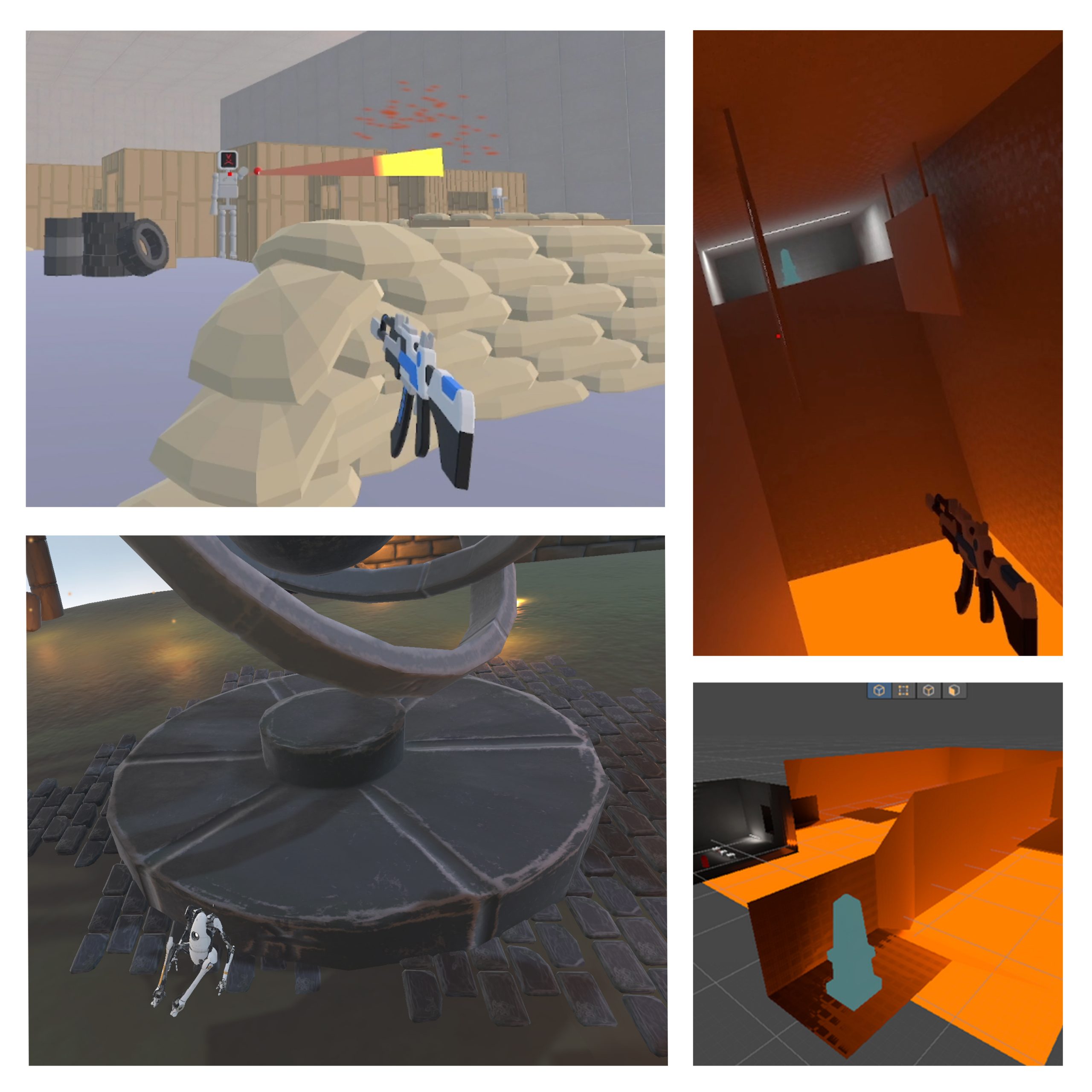
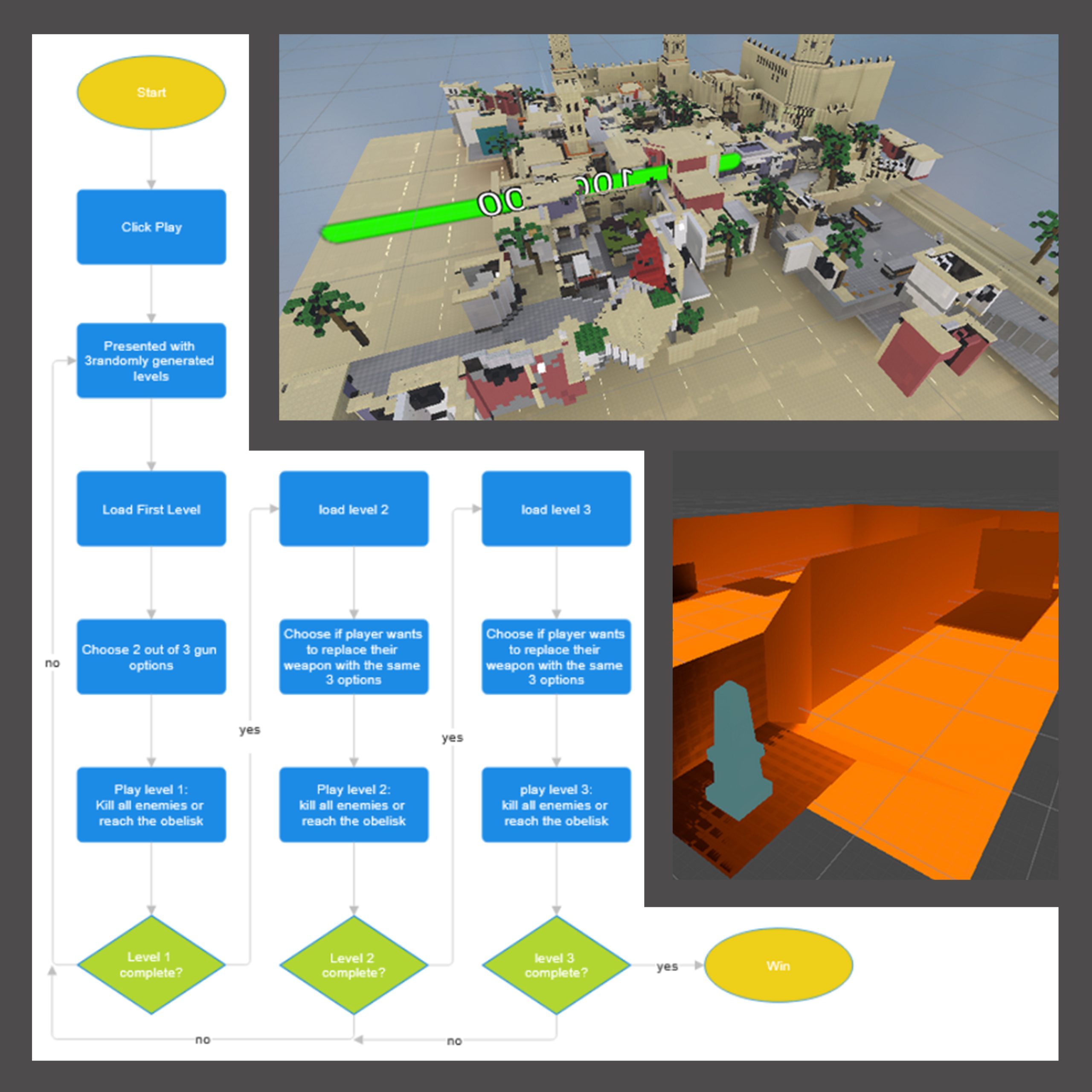
Simulacrum is a first-person shooter project developed to investigate whether parkour-styled movement mechanics enhance player enjoyment in shooter games. The project employs a controlled comparative design in which identical versions of each map are presented: one incorporating advanced movement mechanics, such as wall riding and sliding, and another limited to standard movement. This approach enables an examination of how movement systems influence the overall experience of a first person shooter while minimizing the impact of other gameplay variables.
The project integrates both game development and empirical research. It utilizes 3D assets and includes an experimental playtesting phase involving 22 participants. The primary objective is to evaluate whether movement-based mechanics contribute to a more engaging, dynamic, and satisfying gameplay experience compared to a conventional first person shooter framework. By maintaining controlled conditions between the two versions, the study facilitates a more reliable assessment of player responses.
Through the use of consistent environments and objects across both map versions, the project isolates the effects of movement mechanics on player experience. The findings indicate that the inclusion of parkour-style movement mechanics can meaningfully enhance player enjoyment and the overall gameplay experience.
Tutor: Mr Jacky CHEUNG